
For decades, much of the research on war-related trauma has focused on soldiers, and comparatively less attention has been given to civilians and the long-term impacts of war on local communities.
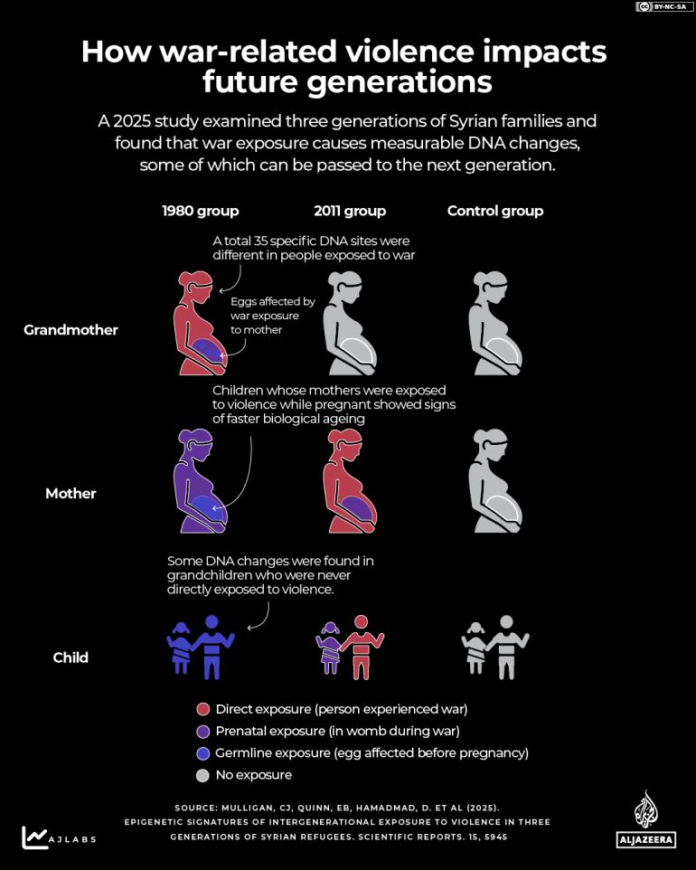
However, new research suggests a striking insight: War trauma may not be confined to the mind but can also leave traces in the body, even at a genetic level.
Studies suggest that extreme stress, such as surviving bombings, can influence how genes behave through the body’s chemical “switches” that can turn certain genes on or off without altering the DNA sequence itself.
This has led researchers to ask whether the effects of trauma might extend beyond those who directly experience war and whether, in some cases, these biological changes could also be observed in future generations.
Another early finding is that being exposed to war as a child may speed up the ageing process, bringing its effects earlier in life and, in some cases, making them more severe.
The true cost of war extends beyond the battlefield and the headlines. It lingers in the lives of civilians long after the fighting ends.